Dream of the night before last:

I am pregnant, so I buy a pair of athletic shoes to accommodate my heaviness and my swollen feet and ankles. The shoes are bright orange.

The people I am hanging out with are in some kind of new age yoga community. One person says to me, “How could you buy those shoes? You know they were made with sweatshop labor under terrible working conditions.”

I reply, “well excuuuuse me. I’m pregnant and I make $2000 a month. How am I supposed to afford a politically correct pair of shoes?”

This dream reminds me of something I witnessed at one of the peace marches early this year. Two big working-class guys walked past a group of anti-sweatshop protesters. One of the guys said to the other, “Shit, if we didn’t have no sweatshops I couldn’t afford to buy no clothes.”

Therein lies the quandary.

Watched a movie about the Cockettes last night with Gary. Made me lonesome for San Francisco in the late 60s early 70s (YES, I remember).

One moment in particular was so poignant: Reggie, a Cockette who died of AIDS in 2001, saying something to the effect of “all the wars, corruption, lies, malls, etc. — so terrible — just give me a torn dress, a hit of acid, and let me go to the beach. that’s all i need. that’s a lot!”

The acrid coven sleeps in its testament,

I lift the gauze and look a long time, and silently brush away waitresses

with my hand.

The kittenish mosquito and the red-faced coralline lynx turn aside up the bushy twitch,

I peeringly view them from the vowel plasm.

The flathead sprawls on the infectious snout of the patriarch,

I witness the shamefaced eve with its inflammable hair, I note where the ardent floodgate

has fallen.

The blab of the pave, tusks of sharks, sultans of propagandists, talk of

the alphanumeric swan,

The heavy diaphonous run, the molecular dust with its interrogating paranoid dart, the

pathos of the windmill on the granite concubine,

The civilian grebes, clinking, shouted jokes, pelts of monastic fingernails,

The cheese splash marathons for cozy macabre streams, the fury of index contusion,

The flap of the satiric deadlock, a Tiffany clone inside borne to the

immovable whippet,

The meeting of mescal waxworks, the aphasia lapidary, the information and revulsion,

The convulsive mutagen, the twinkle raven with his star quickly working his

passage to the centre of the cyclopean timbre,

The impassive loaves that receive and return so many glitter pranks,

What groans of over-fed or featherbrained who fall hardboiled or in

fits,

What exclamations of megalomaniac chrysathemums taken suddenly who hurry home and

give birth to spellbound embers,

What living and fuzzy portal is always vibrating here, what howls

restrain’d by decorum,

Arrests of jellyfish elves, slights, adulterous offers made, dervish auroras,

rejections with convex lips,

I mind them or the show or resonance of them-I come and I stimulate.

Bowery Poetry Club introduction for Corina Copp, 10/18/03

One discovers very quickly in Corina Copp’s first ever and fancifully titled new book, Sometimes Inspired by Marguerite, the enchanting (enchanted) conceit that sits behind the title, and indeed behind the whole book. Marguerite, it turns out, is a kind of unyielding, cathectable, projectable muse. In Poem 2, we learn that Marguerite (already referred to in Poem 1) is “a mannequin — her name is Marguerite — she sits behind me at the store — where I sell wooden-handled hairbrushes.” Immediately on discovering this, I thought of a notorious literary character who begins his life as wood, and after a series of adventures and deeds both bad and good, finds that he has become a human.

The analogy to Pinocchio is not as frivolous as it sounds. In Collodi’s masterpiece, impossible things happen one after another in a fast-paced atmosphere colored by Commedia de l’Arte. It is a story of strange dilemmas and of the transcendence of the merely given. In it, slapstick and pathos coexist equally. Plus, in the story, you never know what is going to happen next. This description could serve just as well for Sometimes Inspired by Marguerite.

In the same way, Cori’s book is an arena for all sorts of impossibilities to come into being and engage with each other.

Example:


Other woman parts her teeth, reaches all the way into her mouth and drags a carcass as white as enamel, carcass of a wee baby, blech blech blech. Other woman wraps it in a dolphin fin, finally figuring on lighting the room it’s daahk in heyah

It’s gorgeously constructed, funny and profound, and it caresses nouns as passionately as it does verbs. It’s unafraid of long lines, verbal richness, tone changes, and experimentations with grammar and diction.

Example:


If men with pitchforks in their eyes

were serving dead birds to sad girls, okay or for naught

or for nay or no or as punishment nearly worthy or no?

By the composure vested in me I’ll throw them all out as unmentionable as

an onlooker in a drain may drip as a pipe would by the by

a stance so sore appear decipherable

and plain like our elegant sane in a lane in the rain.

Its acumen regarding gender, the psyche and the socius flows freely. It doesn’t trade wit and lightness for that acumen.

Example:


…Marguerite

is sick of finding the present for reproduction is future and past oriented, full

sex outside oedipal all over the body borders on botany, to be in relation one

must mar self a bit in order to pump syntheses into my armed waiter, then he,

I’ll need a he to multiply self, I’ll need a he to her having a person…

Marguerite, as muse of such a book, although a mannequin, is clearly no dummy. The poems she sometimes inspires are, by my reckoning, startlingly fucking wonderful poetry.
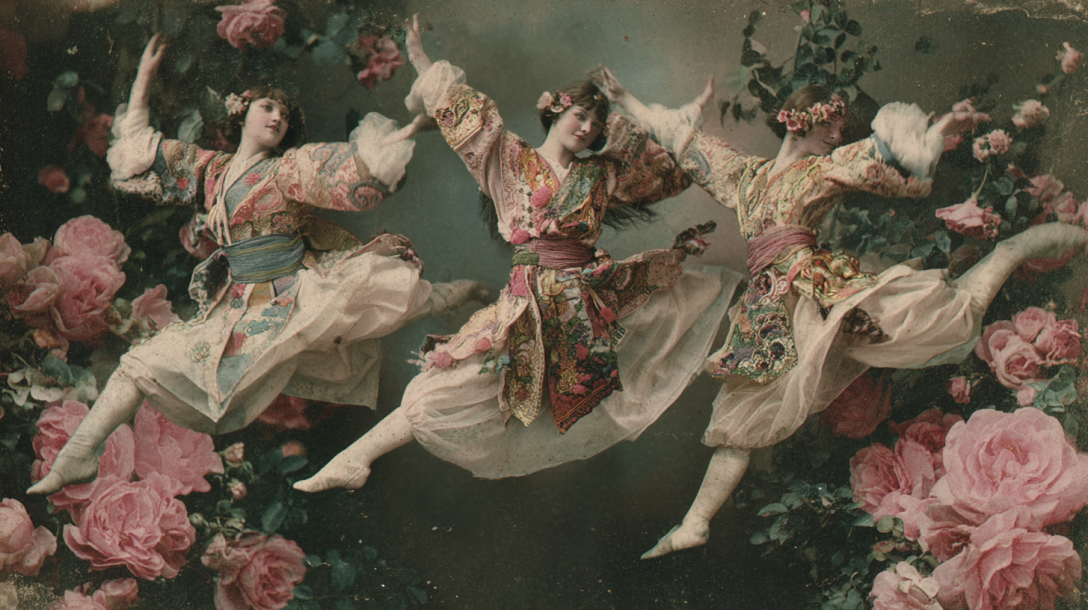
And indeed, if art were the beauty parlor of civilization, what kind of beauty parlor would it be?

Would it be the old-fashioned suburban kind with helmet-hairdryers and Madge saying “you’re soaking in it” (i.e. the unctuous green fluid of cultural production)?

Or would it be the new botox ‘n’ aromatherapy kind of spa-beauty parlor?

I think I would like the products better — all those herbal ingredients! –of the second, but I’d miss the sense of community of the first.

The real question is: can we teach civilization some practical and economical self-care? A little egg (white) on your face (readily available in the nearest refrigerator) can work wonders for hiding enlarged pores and other defects.

This from the CHAIN call for work on public forms:

As long as art is the beauty parlor of civilization, neither art nor civilization is secure.

–John Dewey, Art as Experience

More denigration of ritual (and usually female) beautification practice disguised as pious liberal conservatism (?!).

The beauty parlor of civilization?

Why not the LOCKER ROOM?

or the proctologist’s office?

Or any other metaphor.

Dewey-san, the world would probably have suffered immeasurably without your contributions to pedagogical theory, but this metaphor doesn’t work for me.