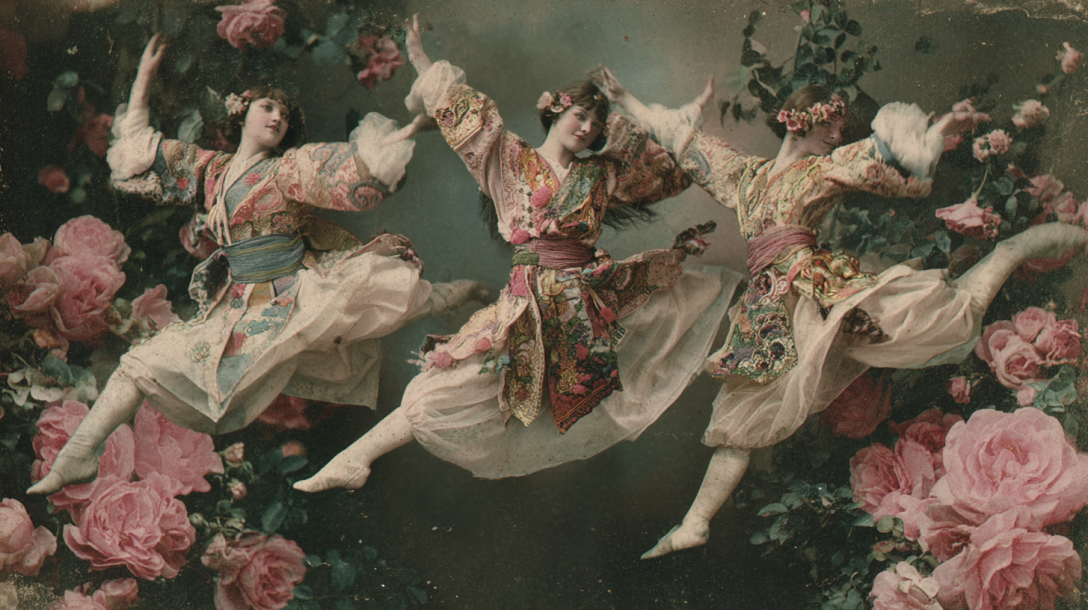
Mutual Interview with Marianne Shaneen, Part II

[[Note: We did not have time to actually deliver this exchange at the Zinc Bar. Marianne is in bold below, Nada in plain text. Marianne please post your stuff on your blog…!]]


Q: you emphasize poetry as a form of bodily excrescence, bodily discharge- the role of ‘the body’, your body, etc.- (relates of course to the above ‘hermaphroditism’ and ‘feminine’)- the body as erotic, the source of pleasure and discomfort, your body as site of perception/sensation, conceptualizing and linguistic filtering and creation, the relationship between sexuality and language.

Q: talk about ‘irritation as a form of pleasure’ (i’m probably misquoting you here) and to what extent and how that is one of the hubs of your work- the role of discomfort, disturbance, agitation, fury, kicking the podium, risk, contraryness, defiance, rule-breaking

(this is related to your ways of being and not being ‘procedural’ and ‘formal’, the langpo ‘tradition’, etc- but that’s only one aspect of what I’m talking about)

and /or…to what extent is poetry, or what fuels and generates your writing, reactive, a defiance. and, how within the writing process itself, it is a defiance, podium-kicking, in the sense of what you’ve said:

“Writing demands limits (do you know who am paraphrasing?) but that doesn’t mean that I don’t always perceive them as something to push against, needle, expand, stand up on (if they are walls), dismantle, prod, kick at, or huddle up against, sobbing inconsolably. What’s interesting to me about poetic language is the way it naturally fights, insofar as it gets irrational, its own limits.”

To address “body” and “sexuality” and writing, I’m going to read from an interview Tom Beckett did with me that was just published online in Jacket 24. That interview answers the question about limits more fully than I have here.


I have said in other contexts that the definite article preceding “body” [the body] strikes me as quite Cartesianly distancing and non-particularizing. It seems to me more accurate to say “my body” as in my individual Nada-casing, Nada-matter & Nada-sensorium or to simply say “body” as in “the feeling of body-ness.” Maybe what you mean is “sensation” or even… “sensationalism”? Because that’s what a body is in relation to what is not that body — a means of sensing, a great fleshy antenna, a corporeal mind. In carnation — a big red one, smelling slightly cloyingly of cinnamon. The seas incarnadine — of wasted bodies, punctured by ideology. How could body not be present in anyone’s work? Even an ectomorph has a body — and is defined, in some sense, by his body. There are some writers, it is true, who seem to be cut off at the neck, whose oeuvre hatches mainly from the part of their body that is between the temples — is “the” body a temple? — but that nevertheless is body.

Body in relation to writing. Writing in relation to body. Not such a huge difference to me — organic metaphors, poems as “birth canals, negative vaginal space” or as what is born, coming out coated with meconium — (can you detect my fondness for a certain brand of highly gynecological “chick art” — still totally necessary to combat the centuries’ vestiges of men’s supercilious suppression, condemnation, and envy of women’s “bodiment”?). Bisexual — poem is also phallus springing up out of nowhere very excited, aroused by what’s around. Or let’s get away from the genitals, shall we? Poem is legs, moving around, exploring. Arms & hands, embracing, feeling up, or just working, getting things done. Little navel void hollow, remembrance of connection. That too. Poem is oversensitive nose, limpid eye, tongue for probing and tasting. Poem is labyrinthine ear — duh. Like a body, a body of work — poems — is *in essence* free — of the market system, I mean. Except both of these you have to pay to maintain. Free health care!

87 billion dollars. How to be other than angry? 87 billion. The clenched body in a state of embattledness: clenched energies. Menstrual blood leaks out… shit… urban environment… guy spreading legs too wide on train… touching my leg… ecch… guy talks to himself, bangs umbrella on floor… it’s sweaty… having to coexist among all these other bodies… poets… with their clenchings and muscular memories, all the pain and rage and fear and lasciviousness each of these beings carries at any moment. The body in dreams: dreamed the other night I wanted to have a baby but had to do it covertly, couldn’t ask Gary, so I needed to seek alternative methods — thought to use another poet guy as a donor, someone I’ve been arguing with in “real life”, who recently accused me, not entirely incorrectly, of using him “as a buttress for your own self-identity, as neo-romantic, humanist,”eroticist,” feminist, identifier with “younger writers,” spontaneously creative, whatever suits your fancy because it’s all so terribly inconsistent….” [yeah, well…] then considered a new cloning method that involved implanting whole or partial babies into the uterus… these babies were frozen. I went to get one but it turned out the frozen baby was only a head — someone asked me, after I had tried unsuccessfully to “implant” it, “did you warm it up first?” oh, I thought, and put it in the oven, but left it in too long — the baby head — it came out yellow, dried, with gnarled teeth (teeth?) grotesque as a mummy.

I apologize in advance for the neo-surrealist truism, but indeed, isn’t it true that the more you explore language, bodies, or dreams, the stranger and more complex they become? You begin to realize the connections between language, bodies, and dreams. All or nearly all people dream, and the site of their dreams is their bodies, which twitch in their dreams and even convulse in orgasms because their bodies and dreams and minds are filled with language (and problems), which in their dreams slips around in the murkiest kinds of ways. Only poetry can formally approximate (I say approximate because even though my poems are freaky and filled with wild imagery and combinations they are nowhere near as vivid and disturbing as my dreams) that slippery problematic dream language.

Language is cream.

Language is crisis.

In a poem called “Essay” in Swoon I describe “the gleeful intensity of opening to crisis”. Crisis, in addition to meaning “life-changing difficulty” is one of those weird French euphemisms for “orgasm,” like “petit mort.” When I write, I feel like I am opening to crisis, exactly as I do if I have fallen in love. Suddenly, there’s this whole new territory — terrifying, gleeful, and intense, as the words open out to and attract other words and I find myself somewhere totally unexpected, aiming for a hypnotic state of hilarious abandon.

more from “Essay”… “love is experienced/as among other things/ rubbing”

This is an echo of my poem “Nothing” in Foriegnn Bodie (p. 32), where

I originally said “Irritation is a form of pleasure.”

It’s true of course — think of irritation as simply friction, without which sex as we know it would not exist.

It’s just one step from friction (or conflict, which I say in Swoon is essential to romantic love) to fury. Here’s the whole poem:

Nothing

Nothing is as it was said —

not the man who I was so

beautiful and I said so what

Not the wing just out of the

chrysalis (gold dot), not the plastic

chonmage wig, not even the web

Only love has the fury to make peace

in all the layers of the onion

sprouting in a black palstic box

Cats yowling together make the sun rise

and dogs bark, irritation

is a form of pleasure

Like strong from a yogi’s nose, devotion

doesn’t pour from your ears — or throat —

diamond shapes from a revolving lamp

I’m not really here

except for the glowing red light

under my arm…

Even the quiet little poems I wrote in Japan tend to be furious:

an inky smell

feistiness

feeds on

banging my feet

on mother’s cold stained glass

thinking to break it.

I’m sure the fury is more primal than anything I can address here without having to pay you $85 for 50 minutes, but it comes from feeling

worthless trivial abandoned unappreciated powerless gratuitous unnecessary disposable ineffectual unappreciated unsupported and betrayed, not to mention in pain

on micro and macro levels. Is there anyone in here who can’t empathize with this? be honest. Sometimes I think my entire oeuvre can be summed up in the howl, “IT’S NOT FAIR>>>>” I don’t mean that in any “merely” personal way.

How to cope with those defeatist emotions? Rage is a survival mechanism, screaming infant big noise red in the face with protest: FEED ME. PAY ATTENTION TO ME. Here’s a poem from 1978, the middle of my adolescence (I was fourteen) which I apparently have not outgrown:

KICKS II

I just quit school

I scarred up my arm

Got too drunk

Lost that charm

The other night we trashed some cars

Set a bin on fire

I ripped up my bellbottoms

And sewed them up with wire

I smoked a cigarette today

Got burnt out on speed

So sick of safety pins

What the hell do I need

No solution

No solution

Here’s a concrete poem also from 1978 that attempts a formal diagramming of extreme forces, positive and negative, positing a kind of equivalence. [sorry folks, I misplaced this one — if I find it I’ll put it up here.] Neither of these poems is very interesting to me, but not because of their concerns, which obviously reverberate throughout my work 25 years later, but because I hadn’t yet learned enough chops. An XBXB rhyme scheme fails to thrill. Now I hope I’ve learned how to make my writing seethe with the tension between its artificed plasticity, its repertoire of disguises, and its primal GRRR (if you’ll permit me a momentary McLurid voicing).

A kind of fury and defiance move through my first collection, “Lip” (1988) as in “Don’t give me none of your lip” — but with much more formal (and therefore emotional) complexity

What life the world hath still

Deliberate verandas, swimming feels

Delight to douse the splendor of the heat

And in the umbrage of your sexuality

I sing a tone, in some sense howl it.

Worst, a small passionate self.

Best, a thinking flower who is a virgin

but a favorite of hell

Delicate viands, swimming feet

Delight to rouse the speaker from his seat

And in the umbrella of your eyelashes

A thing or two can, in some sense, be howled.

Firstly, a cold class-in-itself.

Second, an infant voyeur who is a version

of the sadist as well

I’ll read a little from Vicious Etudes (the angriest poem in V. Imp) and then I’ll stop answering this question.

VICIOUS ETUDES

I have an exaggerated sense of my own unimportance.

–Nada Gordon

i HATE the avuncles

and their stinging

when the fiery concrete tower

rises in the head and

i’m appropo of nothing

standing at the edge

of the hissing stage

and missing far apart

from spiritual dignity.

the narcissi in my arms

smell like rotten breath,

nervous sweat, underwire

undercutting the man in me

with cheap, cloying, adolescent

powder. come here, i want

to alienate you. dyssemia

the volatile prosody i auto-eroticize

with (chick art ) in full view of the panel

of droning authorities in their

“moderation”: they (pea-green)

reduce awareness. stand clear

of the closing mind

of the eternally jerking emotional knee.

the hairshirt pink, frilly, jagged,

dissonant as lava flying up

“more sensitively”

from the dead moon

kissing the white wall

leaving a white (red) stain

and howling inarticulate

into “fabulous opera.”

the “sweetie-pie” flaps

in the detritus (of literature)

like a disjointed secretary

on angeldust.

a deafening chorus

of CLUCKING is heard.

MOON, SWANN, ANGELS,

ROSES – pulverized. ultimately

it doesn’t nausea because

i’m not nausea not a mother

self-effulgent of my own

misguided mother of intention.

the writing falls apart (again…)

when the beautiful boy (me)

gazes into the water

and his phallus becomes

all of him, giant stalk

takes root blooms waxy

veins bursting out and then

there’s me! (again) bursting out and then

again bursting out! my head

the WRITING as two horned

phalluses.

come, come, lunge

at my dungheap.

this is the summer of dissonant

content again, when

all education is

“special” and euphoric

(pulverize) natural (pulverize)

(pulverize)

(pulverize)

IRONY, people. You all remember what that is, right?

I thought Kasey’s blurb for Rodney’s book was super.

I thought Rouge State was a super book.

And I think Rodney should do his reading in drag. As an odalisque.

Kisses to all!

Talking the other day with a male friend about feminism:

“The battle has already been won,” he said. “Men are emasculated.”

“Not emasculated enough,” said I.

&&&&&&&&&&&&&&&&&&&&&

Ashcroft on the one end and on the other, a different kind of censor, the pious liberal [sic]. They both want to tell me what I can and can’t say. Where does that put me? Not in the “center,” surely. The only thing that is in the center is the tiny erect penis, perfectly formed, shimmering gold, that springs out of the center of my forehead, precisely where my third eye would be.

I had the idea that if I were to stroke this lovely little phallus it would exude exquisite, hitherto unexperienced wafting fragrances…

something like frangipani????

&&&&&&&&&&&&&&&&&&&&

I apprehend her, I have to say, as just another man trying to circumscribe my speech, behavior, and imagination. Metal clamps: perhaps the vestiges of her “manhood”, stirring?

&&&&&&&&&&&&&&&&&&&&

Female-ly gendered emotional argument tactics” lash out — then cower — “I’m a victim.” She did this. I do this frequently.

&&&&&&&&&&&&&&&&&&&

Metaphor as a thought crime?

&&&&&&&&&&&&&&&&&&&

As zygotes we’re undifferentiated. I really try not to forget this.

&&&&&&&&&&&&&&&&&&&&

It’s an exaggerated analogy, but what if I were to get my knickers all twisty every time someone used the expression “a pain in the neck.” As a person with chronic pain whose scalenes (neck muscles) feel at most time like steel cables, should I take umbrage? How can those myriad insensitives not understand my plight? It is true that this disability is not something for which I am likely to be killed out of hate (although my congenital “disability”, ethnic judaism, surely was, and may be again in the future), it is certain that I have experienced job loss, greatly reduced income, callous treatment on the part of supervisors, co-workers, some “friends,” and some of those in the legal and medical professions, not to mention the daily tension and pain I can do no more but “manage.” “A pain in the neck,” indeed.

&&&&&&&&&&&&&&&&&&&&&&&&

Petty tyrants everywhere. The preacher on the 5 train, haranguing the full car of weary people. How easily is my admittedly restive irascibility aroused!

&&&&&&&&&&&&&&&&&&&&&&&&

A cornucopia of ideologues…

&&&&&&&&&&&&&&&&&&&&&&&&&

My teaching keeps getting more and more radicalized, the worse the situation in this country gets. I am an ideologue too.

I asked my students the other day, “Is America a free country?”

Most of them said that yes, comparatively speaking, it is.

One said, “yes, but there’s been a regression.”

&&&&&&&&&&&&&&&&&&&&&&&&

I like acting.

Yesterday, walking down Fifth Ave. with Gary right after my belly dance class, talking with him about all the recent debates, I grabbed my crotch, sneered, and made a fuck you sign to the world. For a minute, I really was Sid Vicious.

&&&&&&&

About Last Night

Here is the first section of the text of a talk/reading/mutual interview that Marianne Shaneen and I did last night at the Zinc Bar. The actual talk was both shorter and somewhat embellished. Thanks to Brendan Lorber for hosting, and to Tracy McTague, Nick Piombino, Mitch Highfill, Drew Gardner, Michael Scharf, Joe Elliot, Douglas Rothschild, Jen Robinson, Csaba, Marie, Virginie, Joseph, and a couple of people I don’t know for attending. Marianne’s sections were awesome. Perhaps she’ll post them on her long-dormant blog?

Q [from Marianne]: your writing as hermaphroditic- veering between being unabashedly unapologetically ‘feminine”, unafraid of lush ‘feminine emotionality’, vulnerability, sincerity, fragility,– and male irony, defiance and formalism.

Q: the role and need for the ornate, the opulent

Q: one of the most engaging and compelling aspects of your work to me is the tension and movement between its emotionality and its formalism and obvious awareness of formalism(s). your term ‘procedural expressionism’

(it might be interesting if you could talk here a little about how the irrational, hypnogogic, orphic, prelinguistic ooze factors in too – especially since it’s so ‘unfashionable’)

Let me open with a new take on a Funkadelic song:

False dichotomy

False di-cho-to-my

No simple binaries — I rear up at these. Taxonomic nonsense — separating out qualities for fear of identification with what might be deemed “weak”…

Vulnerability and irony, sincerity and defiance, fragility and formalism — not mutually exclusive — intertwined, interpenetrating. And codependent.

Hermaphroditism — with Aphrodite in the center — she helps me to smudge the chalk at the boundaries of the “two” worlds. Then what’s contained in either can spill in and over.

Being a hermaphrodite also allows me to objectify women to the point that I can keep my own harem. I’m not sure, but I think this could be a form of table-turning or power-grabbing, revenge for the centuries of oppression that infect my gender-memory. When I say “harem” I mean my poems; they are more seraglio to me than any kind of usable or tradeable cultural capital. At once emotional chattel and dowry. To me, poems are odalisques, women. Bodacious, inscrutable, frustrated, querulous, seductive, languorous, fragrant, manipulable, manipulative, hard to understand, easy to please.

Anyway, I love all my women…

All my women…


I’ve lived with cats for years and I appreciate them. The same goes for women…. In a way I have an appreciation of cat-like women. There’s been a cat-like sense about all of my women.

–Paul Blackburn

–or this from Ludacris

Pretty ass clothes

Pretty ass toes

Oh how I love these pretty ass hoes

Pretty ass high class anything goes

Catch them in the club throwing pretty ass bows

Long john draws

Long john stalls

Any stank puss

Makes my long john pause

Women on the cell making long john calls

And if they like to juggle get long john’s balls

But she, she’s still floating over the smoke in all the rooms I play. I

keep her and all my women inside of me regardless of what they say.

It’s not exactly that I identify with these awful guys, but that in some sick sense I long to, to get their power.

So, because I am a hermaphrodite (as well as a whole gaggle of odalisques, since my poems are part of “me”), at the same time that I am this incredible virile polygamous stud or sultan, I also get to be a gay man trapped in a straight woman’s body. Feather boas, musicals. Eartha Kitt, Bette Davis. I’m a cabaret singer manque. Costume and drag. Drag is literalized irony: “woman.” As a hermaphrodite I can make love to everyone — “darrrrrlings”. Scrambling my messages and genders, I give myself the privilege of vacillating between sexes and perspectives (not to mention experiences I will never have). It lets me be true to the very shrill presence of the histrionic trannie who dwells inside me, and as whom I dress up every day, a female impersonator.

from Rodomontade, 1985:


As a courtesan, I teach men how to survive in the wild. Hawk’s breath, dandelion fumes, and wild checker make a salad that is good for the brain as well as the body. The brain is the body. I know, I just wanted to see if you were listening. I am listening to you darling, he said, caressing her downy, rounded belly, whispering your skin is the skin of mushrooms, your hair of an egret’s nuptial feathers, your eye of the wily squirrel.

I throw back my golden mane and bang on the keys. I am a writer of fiction. I am a mother.

My name is Percy Bysshe Shelley. I am rather delicate and morbid, but full of inflamed passions.

I am western thought and I am going to scramble your messages.

I am a demoiselle d’Avignon.

In my writing there is also a fascination, which erupted in that last passage, with the figure of the courtesan — in many traditional cultures the only women who were permitted to be artists or to have (admittedly secondary) power and influence.


Lady’s Prayer

I am an object entire to myself

I am made to lie down in green puddles

and walk the valley of the shadow of sound

for the whore is my better, I shall not wine,

but study the mistakes of my masters and then

and then

(from foreignn bodie)

Studying the mistakes of my masters — why, that’s a western phallocentric education! Of course, we study their achievements, too, which I don’t mean to underestimate. But I have learned to examine their actions and achievements, their proclamations about what is correct and acceptable and desirable, with a good deal of skepticism.

Not long ago, for example, Ron Silliman was extolling the virtues of the clean line on his blog. The clean line… cleanliness… the inverse (pun intended) of the ornate and opulent. Is what’s opulent dirty? The frayed, disorderly opulence of Jack Smith’s “Flaming Creatures” ? What to do with this desire to doodle on everything? Curlicues, flowers, vivid colors, endless ornamentation — no straight lines. Is it too much to think of “the clean line” as an analogy to the (sort of ) rectilinear “uncomplicated” phallus rising to heaven in comparison to the complex folds that surround the vulva, pointing downward to the earth and what’s beneath it (magma!)? Is this the most obvious and boring kind of essentialism? If so, why does an expression like “clean line” get me so riled up? Why does minimalism make me want to SCREAM? I’ll talk about this later when I address defiance and anger — this constant feeling of embattledness.

See my first blog entry on Ululations.

My Whitman poem [posted here on this blog] is an example of what I call “procedural expressionism, ” my primary modus operandum. It means using procedural methods for expressionistic purposes. Here’s a little refresher on “expressionism”, from an online art dictionary. I think it works nicely as a discussion of my work, too:


The subjects of expressionist works were frequently exaggerated, distorted, or otherwise altered. Landmarks of this movement were violent colors and exaggerated lines that helped contain intense emotional expression. Application of formal elements is vivid, jarring, violent, or dynamic. Artists are trying to pinpoint the expression of inner experience rather than solely realistic portrayal, seeking to depict not objective reality but the subjective emotions and responses that objects and events arouse in the them.

Expressionism easily enacts itself. I just let my consciousness loose in a kind of Nabokovian “referential mania” –but less paranoid, aspiring to a condition of obsessive love, in which everything in the world shimmers with significance uncannily reflecting my emotional state. It’s objectivism plus response. Even the Brownings Robert and Elizabeth bibliomanced, and what they found “by chance” echoed back onto their passion. A world undulating with so many objective correlatives that I can’t tell anymore what is “inside” and what is “outside.” Yes, this is a kind of pathetic fallacy. But so? Listen to this list of pathetic fallacies compiled by a science educator complaining about their use in science textbooks:


An anticyclone has higher pressure in its center than around its edges, so the air tries to flow away from the high-pressure core.

A small storm tries to develop in the stratiform-covered region

Because opposites attract, the – charge at the bottom of the thunder cloud wants to link up with the + charge of the Earth’s surface.

This hurricane wants to bring a powerful combo of wind and rain to our forecast

If the tornado wants the windows open believe me, it will open them whether you like it or not!

Because it gets colder as you go up, the atmosphere wants to convect.

Even though it sometimes seems like the atmosphere tries harder, the oceans are more successful at transferring heat…

The atmosphere likes to absorb IR radiation so we have an imbalance.

The water molecules align with the field, as the field changes, the water attempts to change its position to align with the field.

This list very readily becomes, in Kasey Silem Mohammad’s term, a “sought poem.” How? The pathetic fallacy is one of the many formal ways we have of making the world adorable and vibrant. It’s not scientifically proper, but it is instant poetry. Every conscious use of a poetic device is a “mini-procedure.” A procedure gives effective, more or less communicable, formal articulation to the endless feelings that bang about like trapped moths in the tinny shell of the sensorium. I have said elsewhere that a poem is (often) a kind of emotion-processing device (do I choose the mechanistic analogy to lessen my own identification with weakness?), i.e., a therapy. This does not mean that all means of processing emotions or all therapies are poems. Still, to those who would insist that “poetry is not self-expression,” I would reply: balderdash — of course it is, and many other things besides. I did a Google search on “poetry is not self-expression” and found this intriguing statement on a discussion list on the topic:

Gregarious Tory writes:

“Expression” means literally a squeezing out. Thus, “self-expression” translates as (quite simply) a squeezing out of the self. This suggests to me either excrement or disembowelment, neither of which I feel is reflective of the nature of poetry.

I disagree with Tony, and I am interested in the repugnance he exhibits at the notion that writing is something humanly, corporeally, exuded. I most certainly do see writing as a kind of bodily excrescence — a discharge that forms an encrustation. It just doesn’t end there. And the writing doesn’t necessarily come from “my” body, although it certainly comes from someone’s, ripe for appropriation.

Appropriation is a favorite procedure, so I steal language all the time from everywhere. I like especially to steal “emotive” and “vulgar” language to work in service to my own base nature.

Also, because I am allergic to creating my own poetic “architectures”, I like to inhabit others’ as I am Whitman’s.

I like to translate others’ language into other languages and into my own idiolect. I like to invert things: like Barrett Watten, I am interested in “subject/predicate relations” — I like to change subjects or predicates to foul things up — in general I like to foul things up. To me poetic language is dirty language, messed up language, rule-breaking: “I do it because I want to, even though you told me not to!”. Here are some of the many formal devices I intentionally use in order to achieve what are to me poetic effects both in poems and other sorts of writing:

pathetic fallacies

similes

overqualification and hesitancy: “perhapsiness”

obscurely nested sentences with lots of dependent and relative clauses

limitless adjectives and other modifiers

misplaced modifiers.

faulty nominalization (subject/predicate relations)

comma splices

deliberately vague language or “garbage” (filler) language

inappropriate, vulgar, sentimental, embarrassing, violent, stupid, and unfashionable content

and my personal favorite, the wedding of the abstract to the concrete (a form of pathetic fallacy). This last one is meant as a slap in the face to Ezra Pound’s condemnation of “dim fields of peace.” The reason the phrase is ineffective is not because it combines something abstract with something concrete, but simply because its elements are not interesting. By contrast,

“dim cones of lassitude”

or

“pretzel face of sophistry”

are interesting.

All of these things I’ve listed are things that I have been explicitly told, in my study of writing and poetics, not to do. Most of these are things that I tell my students not to do in their own expository writing, at the same time that I am writing down instances of their language “abuses” to use in my own poetry.

Reiteration: I don’t see emotionality and formalism as two separate poles or as opposed in any way except in rigid, dualistic, and fundamentally inaccurate thinking. For this reason I am fascinated by the Hindu concept of “rasa” or emotion. The rasa are formally articulated by types of ragas. Here’s a list of the nine rasa. Although I don’t agree with its exact classifications, I find this list, and the Indian notion that emotions can and must be dealt with formally, both inspiring and descriptive of my poetic concerns:


1. Shringar – This depicts the sentiment of love, sensuality, and erotic emotions.

2. Raudra – This covers the realm of anger, rage, and other violent wrathful emotions.

3. Hasya – Under this Rasa come the joyful, the comic, and happy emotions.

4. Vibhatsaya – Disgust and ludicrous emotions.

5. Veera – Bravery, heroism, and manliness are some of the attributes of this Rasa.

6. Karuna – Sadness, pathos, compassion, sympathy.

7. Bhayanak – This Rasa caters to the emotions of fear, anxiety, and uncertainty.

8. Adabhuta- Wonder and curiosity are two of the attributes of this Rasa.

9. Shanta – Contemplative, meditative and peaceful emotions form this Rasa.

That last one is probably the least present in my work at the moment. I think I need to move out of NYC for that. I may not display a lo of bravery and heroism either. The problem with the taxonomy of these emotions is very like the problem of the taxonomy of colors — a problem of naming. I like very much what Heriberto Yepez said on his blog about this:


Experimentalism is a structural function whose purpose is to open the way to the emergence of new emotions through language. That’s what Stein, Spicer and Hejinian did. So if new emotions don’t come after experimentalism, something went wrong. And American contemporary poets didn’t find new emotions. They only found new careers.

He’s overly harsh, but he’s funny. And I love his definition of experimentalism (it’s not so far from procedural expressionism) — it made me begin to consider the many emotions we have yet to precisely name:

the feeling one has doing domestic chores while listening to music

the unknowable spectrum of animal feelings

the feelings one has thinking about animals

the certain kind of remorse we feel for no reason

the feelings we have in very crowded, lively places

the feeling of gentle, detached violence

the shameful pleasure of certain kinds of suffering

the feeling we have imagining the organs of our bodies

the feeling of recognizing the membrane between anxiety and pride

the exact feeling of impatience one feels when confronting some conceptual art

the rush of feelings about the goddamned fucking fucked-up socius

and the feeling of being unsure of one’s own relationship to it

ANNOUNCEMENT

Marianne Shaneen and Nada Gordon

will enact a mutual interview/ reading/ talk/ performance

with Q and A to follow

this Sunday, November 9

at the Zinc Bar

90 West Houston between Broadway & Thompson

at 6:37 pm

hosted by Brendan Lorber

POETRY INTRODUCTION MANIFESTO

For too long have we listened to the poetry introduction.

The poetry introductions of the past were sententious displays of shallow erudition, wallowing in a mire of studied cleverness.

The new poetry introduction will be casual.

First of all, the poetry introduction will follow the reading rather than precede it.

Or it will be performed in private.

The mind which plunges into the poetry introduction shall relive with glowing excitement the best part of its childhood.

The new poetry introduction will be mumbled, half-audible, and thus ineffable.

For the time is ripe for a poetry introduction not of the harp but of the kettledrum.

Not of the prune, but of the tangelo.

It is incumbent upon us to try to see more and more clearly what is transpiring unbeknownst to the poet in the depths of her mind, even if she should begin to hold her own vortex against us …

So that we may feel it, throbbing.

The audience wants to know everything: predilections, preludes, preferences, poignency

Peppers, pitchforks, pinworms, palatino

Pearls, peanuts, paw-paw, peccadilloes

Puppies, pythons, ponies, provocations,

Palindromes, pastrami, pablum, and plywood.

A dazzling pact has been proposed between the poet and the pasty proclamations of his introducer:

It is up to him and to him alone to rise above the fleeting sentiment of the poet, like a salvo fired in salute.

We submit that the new poetry introduction can only hope to be crowned with success if it is carried out under conditions of moral asepsis which very few people in this day and age are interested in hearing about.

Yet it is a matter, not of remaining there at that point, but of not being able to do less than to strain desperately toward that limit.

The poetry introduction is less inclined than ever to dispense with this integrity, to abandon it, under the vague, the odious pretext that it has to “introduce.”

The poetry introducer no more need cite the banal catalog of the poet’s accomplishments, such as Mairead Byrne’s The Pillar

or Rachel Levitsky’s Under the Sun

or Kristen Prevallet’s Scratch Sides

or Kim Rosenfield’s Good Morning — Midnight —

or Marianne Shaneen’s The Peekaboo Theory

or Rod Smith’s Music or Honesty

No more shall the poetry introduction be detoured, indeed derailed, by the banal reminder that it is happy hour, that drinks are two for one, but that the kind audience should tip the bartender on the second round.

Likewise neither shall the new poetry introduction be bogged down in the morass of readings-to-come, such as Jerome Rothenberg and Charlie Morrow here, tonight, at 8:00 p.m.

or Eddie Berrigan and Heather Ramsdell at the Zinc Bar, tomorrow night, at 6:59

or the Major Jackson talk on Sun Ra, Monday night at the Project

or Frank Sherlock and Tracy Smith at the Project Wednesday night

or the Subpress collective reading here, next week, at 2:00 p.m.

or the reading which follows it, Robert Fitterman and Murat-Nemet Nejat, which will be free to those sticking around from the Subpress reading.

No, the new poetry introduction must bring about a transvaluation of all poetry values.

The new poetry introduction must have more confidence in the moment, this present moment, of the poetry introducer’s thought, than of the silent army of readers waiting to take the stage.

And so, without further ado, bother, fuss, fiddling around, or delay

Without further stalling, hesitation, barring, blockage, or impotent, repeated stabs at humor

Indeed, without further postponement

Or lag

Or dawdling filibuster

Let us expedite our hastening with all due speed and alacrity

And welcome our first reader, Rachel Levitsky.

The Abuse of Mercury

Hot face with cold hands and feet.

Great tension, anxiety, fear.

Fear of a crowd, of the future, of the seriousness of his illness; feels sure he will die.

Aggressive restlessness; tumbles about in bed, cannot lie still; sudden startings.

Pulse frequent, hard, wiry.

Great sensitiveness to noises of any sort.

Stools green, like chopped spinach.

Burning heat in the body.

Despondent, irritable mood.

Sensation of small sticks in the rectum.

Violence of all the symptoms.

Remarkable intolerance of milk. As soon as swallowed, it is thrown up in heavy curds.

Indicated in hysteria, chorea, spinal irritation and neurotic states generally, with jerking, trembling, itching.

Twitching of the eye-lids.

Twitching in the face, mouth, muscles of neck, abdomen, extremities.

Child stupid, semi-conscious; does not understand; muttering delirium; stupor, restlessness.

Head burning hot, with fever and anxiety.

Face hot, dark livid, covered with livid rash.

Tongue dry, parched, cracked.

Eyes congested; pupils dilated.

Stools watery and offensive.

Skin of face and of entire body covered with livid, purplish eruption, disappearing on pressure, returning slowly.

Copious, watery and exceedingly acrid nasal discharge.

Tickling in the larynx, with hacking cough upon inspiring cold air.

Derangements of appetite incidental to having a cold, with strong craving for raw onions.

Abdominal flatulency, copious, burning, pressing downward and causing more severe colicky pain.

Sense of “insecurity” when passing flatus.

Even solid stool passes almost unnoticed.

Stool watery, jelly-like, with great amount of flatus.

Burning in the anus and rectum.

Worse early in the morning, desire for stool driving him out of bed; from eating and drinking; in hot, dry weather.

Better in the open air; from discharge of flatus; from local use of cold water.

Loss of appetite; sour eructations, craving for starch, chalk and other indigestible things.

Stool accumulates in the rectum because of lack of desire (and inability) to expel it.

Stools hard, knotty, covered with mucus, followed by bleeding and cutting pain in anus.

Tip of nose looks red.

Thick, red rash all over the body, like scarlet fever rash.

Burning, acrid leucorrhoea, watery; aversion to sexual intercourse.

Menses copious, black, too early, clotted, with sense of great exhaustion and chilliness.

Acrid, hot, watery, coryza, corroding the lips.

Hoarseness and burning of the larynx.

Constipation of hard, crumbling stool, covered with mucus; after stool, smarting and soreness in the rectum.

Diarrhoea of green, mucous stools (occur also during menses).

Leucorrhoea like the white of egg, with colicky pain about the navel.

After urinating, brown, slimy discharge from the vagina.

Tendency to use profane and vulgar language on every occasion.

Distrust of everybody; hypochondriasis; mental irresponsibility and fickleness of purpose.

Sensation as of a hoop or band around a part.

Sensation as though a plug were pressing in different parts of the body (head, eyes, ears, chest, abdomen, etc.).

Excessively irritable, fretful, sulky.

Child cannot bear to be touched or looked at; objects to being washed.

Face covered with pimples; cracks in the corners of the mouth; yellowish crusts on cheek and chin.

Tongue coated thick white, as though covered with milk or whitewashed.

Moist eruption on and behind ears.

Finger-nails split easily; horny growth under the nails.

Horny excrescences over the body.

Gums spongy; bleed easily.

Appetite abnormal; craves acids and pickles.

Constant belching of gas.

Diarrhoea, watery, slimy, windy; stools mixed with hard lumps.

Thick, hard scabs over the body; on the chin; bleed when touched.

Skin covered with pimples and vesicles.

Soles of feet very sensitive; horny growths on the feet.

Great lassitude and drowsiness.

Skin cold; covered with clammy, sticky perspiration.

Tongue thinly coated white, with red papillae, red, in streaks or dyr in the median line.

Pustules on the body, leaving a bluish-red mark; they develop slowly and are slow in passing through suppuration.

Tired, as if bruised all over.

Bag-like swelling under the eyes.

Fever without thirst.

Tickling in the little spot on the posterior pharynx, exciting cough which stops as soon as a bit of mucus is raised.

Severe concussive cough; it painfully jars the head, so he must bend the head back and hold it to relieve the severity of the shock.

Diarrhoea of yellow-green stools, in the morning, with abdominal soreness.

Enlargement and burning-stinging pain in the ovaries, especially right.

Bearing down as if menses would appear, followed by scanty discharge of black mucus.

Hoarseness and aphonia, in professional singers.

Cough, excited by laughing.

Viscid, jelly-like mucus in the larynx, coughed up in the morning.

Easy expectoration of substance looking like boiled starch.

Face aged, withered, bluish.

Pains increase and decrease gradually.

Always in a hurry.

Great longing for fresh air.

Great desire for sweets.

Apprehension and dread of meeting people, of being in a crowd. Going to some public entertainment brings on diarrhoea.

Erroneous perception; as to time, minutes seem hours; as to gait, a slow gait seems fast.

Feeling as though the affected parts were expanding.

Headache, relieved by tightly bandaging the head, with creeping, crawling sensation in the scalp.

Great heat in the eyes; it dries up the eyelashes.

Coughing when singing a high note; chronic hoarseness.

Excessive gastric flatulency; seems as though stomach would burst; gas belched up with great difficulty and much noise.

Diarrhoea, green like spinach, in flakes, as soon as he drinks or eats sweets.

Ulcerative soreness in the middle of the urethra as from a splinter. When passing the last drops of urine, cutting pain from the posterior urethra to anus.

Better in the open air; when the wind blows in his face; from belching up of gas.

Sore, lame, bruised feeling all over, as though beaten.

Fears being touched; dreads having anyone come near him.

Oversensitiveness to pain.

Head hot, the rest of the body cool.

Taste as from a bad egg; pressure in the stomach as from a stone.

Stools offensive, brown, putrid, bloody; after stool exhausted, so he is obliged to lie down.

Skin covered with itching, burning, small pimples and boils.

Black and blue spots on the body.

Face pale, sunken, cachetic, cold, covered with cold sweat; eyes sunken; agonized expression.

Great anguish; despair; fear of death; suicidal tendency.

Sleeps with the hands over the head.

Pulse small, rapid, intermittent.

Eructation of bitter, sour substance, irritating the throat as though from an acid.

Burning pain, as though from a live coal, in the affected part (carbuncles; stomach; abdomen).

Diarrhoea of dark-brown stools; of cadaverous carrion-like odor; worse from eating or drinking.

Diarrhoea like chopped egg, horribly foul, preceded by restlessness and anguish, followed by great prostration and burning in the rectum.

Every effort is followed by exhaustion; when lying still he is less conscious of his weakness.

Dry, bran-like, scaly eruption, with itching and burning, worse from scratching.

Saliva profuse, acrid, excoriating the parts it touches; worse from exposure to sharp wind.

Voice uncertain; hoarseness.

Discharge of fetid, green, purulent matter from nose and ears.

Great mental depression; talks of committing suicide. Often accompanied with cerebral congestion and sexual furor.

Profound depression, followed by sudden, but temporary, cheerfulness.

Hypersensitiveness of special senses.

Pain about the eye, in the bony structures, extending from above downward, into the eye-ball.

Fetid odor, like old cheese, from the mouth; on young girls at puberty.

Burning-itching in the vagina, inducing self-abuse; parts sensitive.

Worse in the morning; in cold air; in the winter, when obliged to be quiet; from abuse of mercury.