<!– /* Font Definitions */ @font-face {font-family:Cambria; panose-1:2 4 5 3 5 4 6 3 2 4; mso-font-charset:0; mso-generic-font-family:auto; mso-font-pitch:variable; mso-font-signature:3 0 0 0 1 0;} /* Style Definitions */ p.MsoNormal, li.MsoNormal, div.MsoNormal {mso-style-parent:""; margin-top:0in; margin-right:0in; margin-bottom:10.0pt; margin-left:0in; mso-pagination:widow-orphan; font-size:12.0pt; font-family:"Times New Roman"; mso-ascii-font-family:Cambria; mso-ascii-theme-font:minor-latin; mso-fareast-font-family:Cambria; mso-fareast-theme-font:minor-latin; mso-hansi-font-family:Cambria; mso-hansi-theme-font:minor-latin; mso-bidi-font-family:"Times New Roman"; mso-bidi-theme-font:minor-bidi;} @page Section1 {size:8.5in 11.0in; margin:1.0in 1.25in 1.0in 1.25in; mso-header-margin:.5in; mso-footer-margin:.5in; mso-paper-source:0;} div.Section1 {page:Section1;} –>
Author: Nada Gordon
Breeze, Burma, Baroqueify!
What if more actually is more? How can we create writing that is more sumptuous, more intense, more curvaceous, more elegant, more obscure, more grotesque, and more beautiful? Let’s traverse the ornate forms of the baroque in pursuit of a more intensely ornamental language. Using others’ texts as starting points, we will supplement, enhance, copy, modify, twist, mangle, and decorate words, syntax, structures, tropes, and concepts to maximize sublime bewilderment. We will read some essays on theories of ornament (and anti-ornament) to inform our investigations. Writers whose works we will explore may include Rabelais, Donne, M. Cavendish, Loy, Huysmans, O’Hara, Koch, and Coolidge, as well as Stacy Doris, Lisa Robertson, Brandon Brown, Adeena Karasick, Dana Ward, Corina Copp, Julian Brolaski, Charles Bernstein, and Julie Patton. “Nonpoetic” sources for poem construction will be encouraged. Not a traditional “poetry workshop,” Baroqueify! will mainly focus on analysis, discussion, and reverse-engineering of texts by others, as well as mindcurling writing exercises. Our seminar will conclude with work on performance strategies to enhance the baroque sensibilities of the writing. Come decorate this fucked-up world with me!
Common terms and phrases
supreme court? bath/body works? ohio?
It’s so weird – someone comes to my blog often – from “supreme.court.gov” – from Columbus, Ohio – but then the server or ISP or whatever is “bathbodyworks” – not sure whether this is some sort of government surveillance or if someone comes to check out ululations from their retail job.
Softening the Blow at the Terror of the Heart of Existence
@font-face { font-family: “MS 明朝”; }@font-face { font-family: “MS 明朝”; }@font-face { font-family: “Cambria”; }p.MsoNormal, li.MsoNormal, div.MsoNormal { margin: 0in 0in 0.0001pt; font-size: 12pt; font-family: Cambria; }p.MsoListParagraph, li.MsoListParagraph, div.MsoListParagraph { margin: 0in 0in 0.0001pt 0.5in; font-size: 12pt; font-family: Cambria; }p.MsoListParagraphCxSpFirst, li.MsoListParagraphCxSpFirst, div.MsoListParagraphCxSpFirst { margin: 0in 0in 0.0001pt 0.5in; font-size: 12pt; font-family: Cambria; }p.MsoListParagraphCxSpMiddle, li.MsoListParagraphCxSpMiddle, div.MsoListParagraphCxSpMiddle { margin: 0in 0in 0.0001pt 0.5in; font-size: 12pt; font-family: Cambria; }p.MsoListParagraphCxSpLast, li.MsoListParagraphCxSpLast, div.MsoListParagraphCxSpLast { margin: 0in 0in 0.0001pt 0.5in; font-size: 12pt; font-family: Cambria; }.MsoChpDefault { font-family: Cambria; }div.WordSection1 { page: WordSection1; }ol { margin-bottom: 0in; }ul { margin-bottom: 0in; }
biochemical reactions that switch on behavior.
it’s actually because god planned this for you,
and he wants you to learn something from it.”
//Do// things happen for a reason?
I’m thinking… not.
Stupor
Her her her. Clutter amongst clutter. Starhewn dreamdustSo much piled and saved, or to be saved – causing its ownform of distraction. Mid-flight, she looked out to the sea.Its astonishment held her.
What’s a useful transcendentalist anti-telos in poetry and why? Or, what is the form of a “useful transcendentalist anti-telos” in poetry and why?If cumulative behavior defines the construction, and that construction’s accretionary (aleatory) behaviors are its manifest tactics and actions, a building, or a body, as a meaning-free map, redrawn to make of itself the a priori object: the poem. Framed for right action.I’d like to begin.
There are radiation loops that drift through space and cause us to blink. I see an armored car inside a glass house. The outer coating’s invisible lens peels away the disguise. We are inherently evil negotiators in an outside world.
I want to tear the heartfrom refused convalescence& feed it those long frondsof river bed grass. I want totear the heart out of style& put it betweenutter thrall & the infancyof all things impure

That we are all already plagiarists is the gist of a short essay called “Tosaku-byo” (Literary kleptomania) that Terayama would write in 1961: “The first symptom of the diease is showing interest in what other people are doing.” As the condition grows more serious, the individual starts to be conceived as a part of broader society and (gasp) bgins interacting with it. Terayama notes that since wer are the authors of our own everyday lives, it follows that brushing one’s teeth in the morning, reading the newspaper, eating food in a particular way, walking with a certain gait, and choosing appropriate clothing are all plagiarized from a set of notions of normal behavior.
Stellar sea cows, svelte manatees embraceAnd lob their salty aloes each to eachWhile we graze greenly on the filtered raysFanned from their froth. I beg for you to teachMe all the ways the Romans fucked, and howJuventius, with honeyed eyes, would sitIn Catulle’s lap, and lick his salty brow.Of all the wooing words that ere were writDid Bernadette choose want for witor skylark for a skylark’s fond embrace?
I’ll undo the seashore from your door’s lock, unbutton the forest. I’ll lug plenty of lubricant and witticisms. I’ll fuck you once, but it will feel like nine fucks. When you want to get away, writing feels you. It’s always wandering; it’s always error in the other’s stupid mouth.
@font-face { font-family: “Times”; }@font-face { font-family: “MS 明朝”; }@font-face { font-family: “Cambria Math”; }@font-face { font-family: “Cambria”; }p.MsoNormal, li.MsoNormal, div.MsoNormal { margin: 0in 0in 0.0001pt; font-size: 12pt; font-family: Cambria; }.MsoChpDefault { font-family: Cambria; }div.WordSection1 { page: WordSection1; }
On Nilling, Transitional Vertebrae, Homo Erectus, Starseeds, Humid Gardens, Gold Spraypaint, Abramovic, Pem-Skool, Videosouls, etc.
nill (nl)
v. nilled, nill·ing, nills Obsoletev.tr.Not to will; not to wish.v.intr.To be unwilling; will not.
[Middle English nilen, from Old English nyllan : ne, not; see ne in Indo-European roots + willan, to desire; see wel-1 in Indo-European roots.]
I recently learned to my great surprise that I have a “transitional vertebra,” which has likely been contributing, for decades, perhaps, to my spinal discomfort. It’s a relatively rare birth defect that connects me to our homo erectus ancestors, who had six vertebrae in their lower spines, whereas normal contempo-humans have five; what I have is something inbetween, neither lumbar nor sacral. According to this website, it may indicate that I am a “starseed.” A starseed!
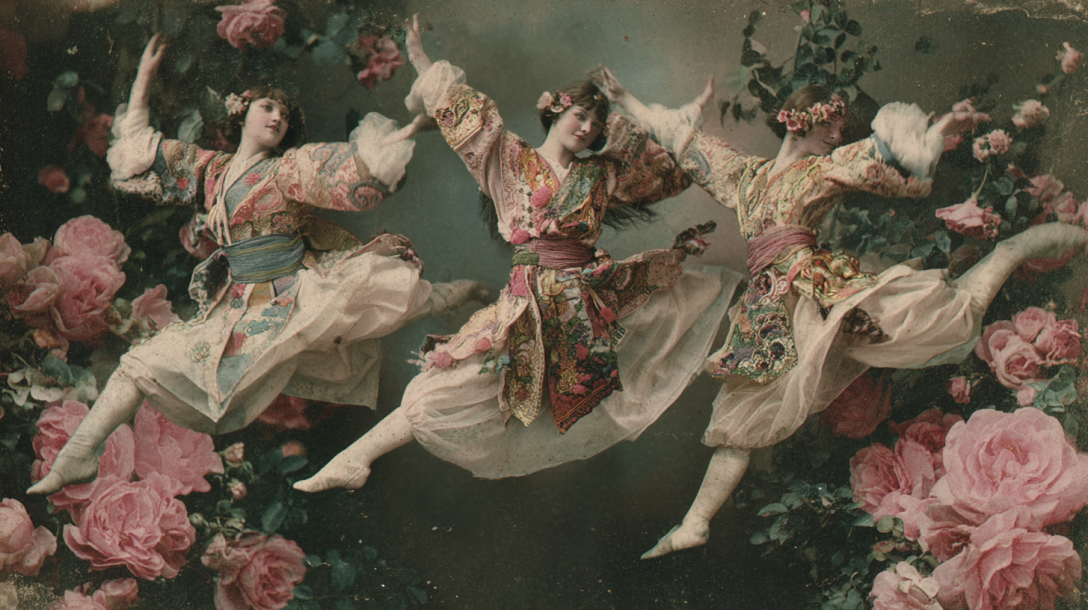
The worst thing I can say about Nillingis that its cover is a beautiful off-white card stock that doesn’t fare well in one’s purse over several weeks, which is something of a pity since it is a book that should be lovingly carried around in order to read it in different places. The first place I read it was in my co-op garden amongst the bleeding hearts and ferns, and the coral roses blooming on the bower. The day was humid like the prose. I read it as I was waiting for the gold spray paint to dry on some cheap frames I’d bought to frame some antique French postcards of roses.
It was in the garden that the cover acquired its first fingerprints, and despite some discomfort – the stickiness of the weather and attendant mosquitoes, the feeling that something sharp was poking through my left buttock, the gold spraypaint that had stuck toxically to the thumb and forefinger of my right hand – I felt myself hypnotically inducted into the whirling galaxy of this book, one of whose foci, indeed, is the mechanism (although that is too cold a word) – the miracle, really – of reading:
“…I fall into the lace of the text, the vellum; caught there, I contemplate my masters.” (p. 22)“As I read my self-consciousness is not only suspended, but temporarily abolished by the vertigo of another’s language. I am simply its conduit, its gutter. This is a pleasure.” (p.26)
“Melancholy is the experiential quota of frictive change.”“Seeing is also inexperienced. The optical threads begin to entwine, embroider[!]. Melancholy gets detailed, intricate. By ‘the social,’ I mean also the gestural ornament, which is for sight. Everything appears for other eyes. Being leans into recogntion. The lens is a social ornament.”“The melancholic eye expects discomfort.”“In dark space, pictorial depth is guaranteed or twinned by the sensed or introjected interiority of the subject. This interiority could be characterized as an inconsistent system of metamorpheses – spatial extention inwards from the locus of doubt or uncertainty, towards something not the same as the present. Inconsistent because it’s not smooth extension. In melancholia extension stutters, braids, lurches, fucks, shuns, strokes, and snags in contingency.”“…ornament perceives.”
Nilling is not literary criticism, exactly – it’s more like philosophy – and at moments it is the sort of philosophy in which this melancholic soul at least finds consolation even beyond the sheer literary/aesthetic rapture at the beauty of her language – she helps me remember why indeed it is that I am compelled to do what I do when (willy-nilly) (as it were) I find myself making poems (sorry, I’ve left off page numbers, but all quotes that follow are from the final “Untitled Essay”):
“Language, the historical mode of collective relationships, is also the aptitude by which humans innovate one another as subjects.”“Through the poem we receive rhythm, or the specificity of continuance as a disposition, a momentary form, and we receive the urgent call to always renew our vernaculars, to set them melodically adrift in the civis, in the domus, among bodies.”“…the poem, with its provisional distributions and tentative relationships,its chaotic caesura, temporarily gathers a received and spoken reciprocity, where the I and the you create one another for the pleasure of a shapely co-recognition.”


l)