
By Eleanor Whitcomb Hale
I have spent forty years teaching poetry, and if there is one thing those years have taught me, it is that a poem must begin in an act of courage.
Not the courage to shock. Not the courage to transgress a convention or to say something deliberately outrageous. Those things are easy, particularly in a culture that increasingly rewards provocation.
I mean the courage to tell the truth.
To stand, as it were, before another human being without the protection of irony, and say: This happened. This is what I felt. This is what I know.
Reading the poetry of Nada Gordon, I find myself returning to this distinction with a growing sense of sadness.
Gordon is clearly gifted. Her linguistic intelligence is undeniable, as is her ear for the unexpected collision of words. She has produced an extensive body of work, and I do not wish to diminish the seriousness of her commitment to writing.
But I find myself wondering whether her considerable talents have become an obstacle to the very thing poetry asks of us.
I wonder, in short, whether she is afraid to mean what she says.
Let me explain.
In “Six Feet Away from Them,” a poem written during the pandemic, Gordon offers us a domestic scene. She moves through her apartment, eats leftover curry, notices her unworn skirts, looks at Amazon, and observes her cat. Her boyfriend sits in the kitchen. A governor appears on television.
There is material here for something genuinely moving. The pandemic was, for so many of us, a period of profound isolation, uncertainty, fear, and loss. I lost two dear friends during those terrible months, and I know that many of my students experienced grief beyond anything they had previously imagined possible.
Yet Gordon seems almost determined to keep the experience at arm’s length.
She tells us about her purple leggings.
She tells us about the chandelier.
She tells us about shopping.
At one point, we are given the extraordinary opportunity to witness an actual emotional response: tears. But even here, the poem quickly moves on, refusing the stillness in which feeling might deepen into recognition.
Why?
Why not stay with the tears?
Why not allow the reader to enter that moment of sorrow?
The poet seems to believe that a rapid succession of details will somehow communicate the texture of a life. And perhaps it does, in a limited sense. But a life is more than its inventory.
I often tell my students that specificity is not the same thing as truth. A poet can name every object in a room and still fail to tell us what it means to be alive in that room.
This is a difficult lesson, because young writers are frequently seduced by cleverness. They discover that they can make a surprising image, or place two incongruous things beside one another, and suddenly the poem seems to sparkle.
But sparkle is not illumination.
In the work of Ada Limón, for example, we find an extraordinary willingness to encounter the ordinary world without seeking refuge in cleverness. A horse, a tree, a roadside, a body: such things become occasions for genuine attention. Limón understands that the poet’s responsibility is not to demonstrate mastery over experience but to remain open to its transforming power.
Gordon seems unwilling to surrender that mastery.
She is always performing.
And performance, however accomplished, is not the same as presence.
Consider also the poem “Asia,” in which Gordon stages a series of extravagant verbal collisions, including the wonderfully peculiar phrase “bitter time-fused pantaloons.”
I can imagine my students laughing at this, and I would not discourage them. Humor has its place in poetry, certainly. But I would ask them a further question.
What do we know, after reading this poem, that we did not know before?
What human experience has been enlarged?
What feeling has been made available to us?
What necessary truth could not have been communicated in any other way?
I suspect Gordon herself might reject these questions as naive. She might say that poetry need not communicate a truth, that meaning is unstable, that language is a material to be manipulated rather than a transparent medium for expression.
These arguments are familiar to anyone who has taught in an American university over the last half-century.
But I confess that I have grown weary of them.
There comes a point when the insistence that language cannot tell the truth begins to sound very much like an excuse for not trying.
I think of Marie Howe, whose poems so often emerge from an encounter with mortality, love, or the sheer astonishment of being human. Howe does not pretend that language can resolve the mysteries of existence. She understands, however, that our inability to resolve those mysteries does not release us from the obligation to face them.
Indeed, it is precisely our vulnerability before the unknown that makes poetry necessary.
I would like to see Gordon face something without turning it into an occasion for verbal display.
I would like to see her write about a person she loves without immediately introducing a joke.
I would like to see her describe a loss without decorating it.
I would like to see what would happen if, for once, she trusted the reader enough to be simple.
Simplicity is not a deficiency of imagination. It is one of the highest achievements of the mature artist.
When I was a young poet, I too believed that difficulty conferred seriousness. I read the great modernists and experimented with fragmentation, syntactic disruption, and the deliberate refusal of closure. I understand the exhilaration that accompanies the discovery that language can be made to do almost anything.
But eventually I discovered that the deepest work of poetry lay elsewhere.
I discovered that a poem could be both beautiful and comprehensible.
That it could speak to a woman in a hospital waiting room, or a man grieving his father, or a child frightened by the changes occurring in her family.
That it could offer not merely stimulation but companionship.
This is what I mean when I say that poetry matters.
Not because it dazzles us.
Because it reminds us that we are not alone.
Gordon’s poetry, by contrast, often feels curiously solitary. Though it borrows endlessly from the language of others, it seems reluctant to enter into genuine communion with them. Voices pass through the poems, but they rarely become people whom we can recognize, love, or mourn.
There is a difference between collecting voices and listening to them.
There is a difference between an assemblage and a community.
And there is a difference between calling attention to the self and allowing the self to become a point of contact with the world.
I do not mean to suggest that every poem must be autobiographical. Nor do I believe that the poet has an obligation to confess private suffering. The imagination is a great gift, and the most deeply felt poems may be entirely invented.
But invention, too, must serve an emotional truth.
I think of the extraordinary generosity of Ross Gay, whose work demonstrates that joy need not be shallow and that attention to the world can be a form of love. Gay’s poems invite us into relationship. Their pleasures are not merely private accomplishments. They are offered.
That word matters to me.
Offered.
Too often, Gordon’s poems seem less like offerings than demonstrations.
See what I can do with this word.
See how many associations I can generate.
See how thoroughly I can overturn your expectations.
But the reader is not a spectator at a linguistic gymnastics competition.
The reader is another human being.
And I believe that the poet owes that human being something.
Not an explanation. Not a moral lesson. Certainly not reassurance.
But honesty.
A willingness to be seen.
An acknowledgment of our common vulnerability.
I recognize that such language may strike some contemporary writers as embarrassingly earnest. We have become suspicious of sincerity, perhaps because sincerity exposes us to disappointment. It is safer to be ironic. Safer to anticipate criticism by making a joke before anyone else can.
But poetry is not supposed to be safe.
I remember an afternoon many years ago when a student brought me a poem about her grandmother’s hands. The poem was awkward, sentimental in places, and almost entirely without technical sophistication. But there was one image, the grandmother smoothing the corner of a tablecloth with her thumb, that brought the room to silence.
The student had seen something. She had loved something. And she had found a way to make that love visible. I have never forgotten the poem.
It was therefore with particular dismay that I encountered Gordon’s poem “Grandmother’s Hands,” from Emotional Support Peacock.
Here, surely, was an opportunity for tenderness. Here was a subject that has inspired poets across generations and cultures: the aging hands of a beloved elder, their accumulated labor, their gentleness, the visible evidence of a life spent caring for others.
But Gordon cannot leave the hands alone.
They become instruments of grotesque transformation, acquiring attributes of animals and fantastic creatures. They become canaries, tentacles, a vehicle for increasingly extravagant verbal disturbances. At one point, they are imagined collapsing under the weight of the universe itself.
And finally, in an image whose violence I find almost impossible to reconcile with the poem’s ostensible subject, they participate in the emergence of an unborn egg.
What are we to make of this?
I can admire the ingenuity. Certainly I can admire it. But admiration is not the same as being moved.
I keep returning to the grandmother herself.
Where is she?
What did she do with those hands? Did she knead bread? Did she braid a child’s hair? Did she hold the poet when she was frightened? Did they tremble as she grew older?
We are given no opportunity to know.
Instead, the grandmother disappears beneath an accumulation of linguistic effects. Her hands are no longer the hands of a human being. They have become occasions for the poet to exhibit her facility with startling images.
I find something almost heartbreaking about this refusal of intimacy.
It is as though Gordon cannot bear to allow her grandmother the ordinary dignity of having been loved.
Perhaps the poet would tell me that these transformations constitute a form of love. Perhaps she would argue that the fantastic images recover something about the grandmother that conventional elegiac language could never express.
I would be willing to listen.
But I would ask her, gently, whether such extravagant transformations might also be a means of avoiding the difficult simplicity of grief.
Sometimes a hand is enough.
Sometimes the most courageous thing a poet can do is let it rest upon the table.
I think again of the student whose poem about her grandmother’s hands I still remember after so many years. Her single image of an older woman smoothing a tablecloth contained an entire lifetime of care. Nothing in that poem asked to be admired for its ingenuity. It simply asked to be received.
I cannot say the same of the dozens of technically dazzling exercises in verbal ingenuity I have encountered over the years.
Perhaps that is unfair.
Perhaps there are readers for whom Gordon’s extravagance opens doors that my own aesthetic preferences would leave closed. I hope so. I would never wish to prescribe a single kind of poetry.
But I cannot abandon the conviction, formed through decades of reading and teaching, that the poem’s deepest purpose is to bring us closer to one another.
I would ask Nada Gordon to consider what might happen if she stopped trying so hard to surprise us.
If she allowed an image to remain an image.
If she allowed sorrow to remain sorrow.
If she permitted herself the extraordinary vulnerability of saying something plainly and meaning it.
I believe there is another poet somewhere beneath all that verbal exuberance.
A quieter poet.
A braver poet.
A poet who might yet discover that the most radical thing she can do is to speak from the heart.
And I hope, sincerely, that one day we will have the opportunity to hear her.
About the author
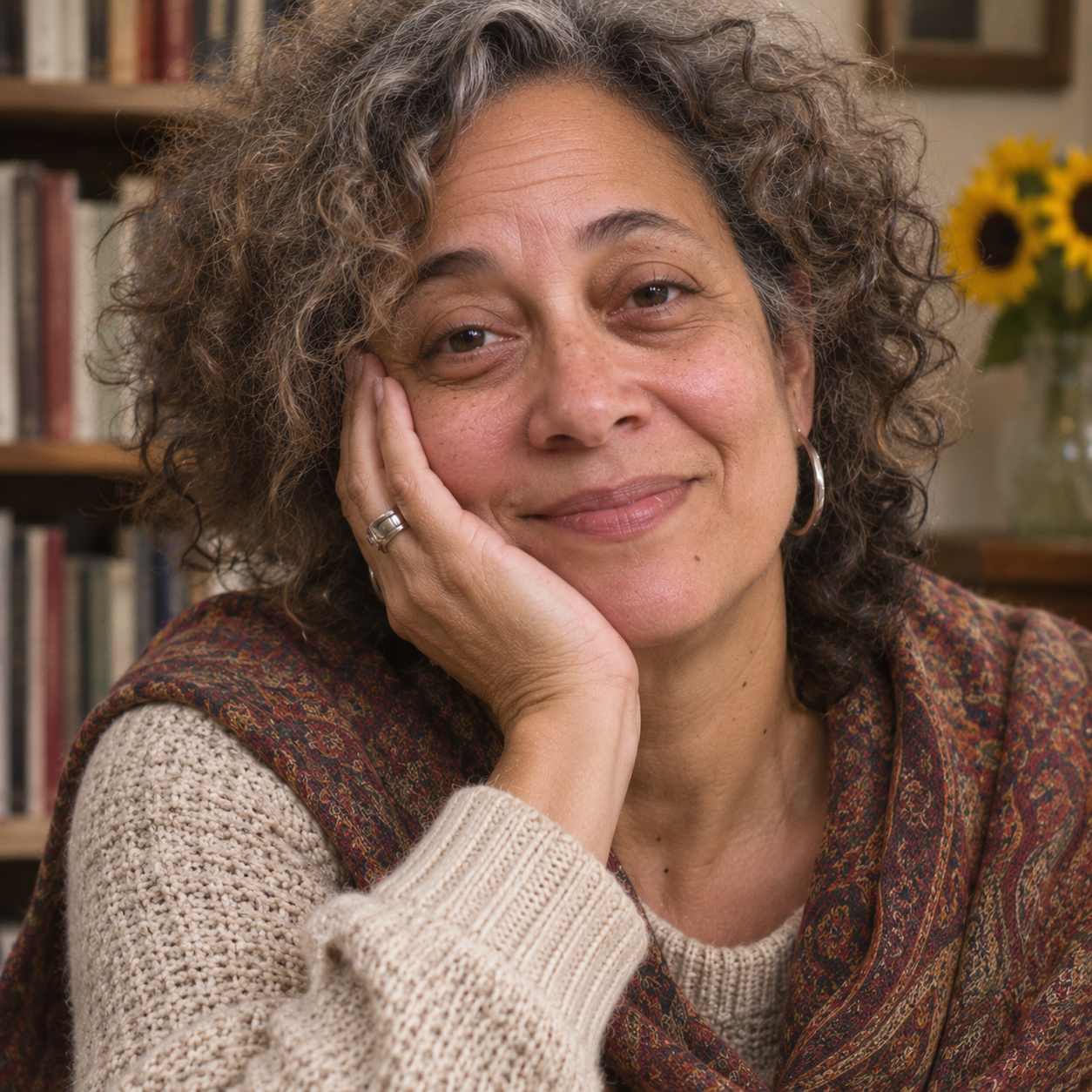
Eleanor Whitcomb Hale is an American poet, educator, and former Poet Laureate of Iowa. She is the author of fourteen collections of poetry, including The Orchard Behind the House, What We Carried Home, The Necessary Silence, and When the Light Was Ours. Her many honors include the National Book Award for Poetry, a MacArthur Fellowship, a Guggenheim Fellowship, two National Endowment for the Arts fellowships, six Pushcart Prizes, and the Wallace Stevens Award for lifetime achievement. Her work has appeared in The New Yorker, The Atlantic, Poetry, The American Poetry Review, and The Best American Poetry. A longtime faculty member of the Iowa Writers’ Workshop, she has served as a Chancellor of the Academy of American Poets and as a poetry consultant to numerous national literacy initiatives. Her poems have been translated into twenty-three languages. She lives in Iowa City with her husband, a retired professor of American history, and their golden retriever, Mercy.
Editorial note: Eleanor Whitcomb Hale is a fictional poet and critic. This essay was developed through a critical dialogue between Nada Gordon and ChatGPT.

